The world as I see it.

Thoughts on a variety of topics.

Thoughts on Immigration

18/01/2018

We currently have a lively and loud debate going on about immigration into the United States.  This has gotten me thinking.


Although loud and with some very inappropriate language, this debate may actually be useful — even needed.  It is probably appropriate that we re-examine our strategy and values on the subject of immigration.


What are our values as Americans?  What strategy do we form and what policies do we put in place?  Do we allow open immigration?  Do we close inward and stop immigration — or restrict it to only a few certain types from certain places that we feel comfortable with?


Now, as for myself, I do not endorse unlimited immigration.  I feel that it is appropriate that there be some limits.  I can agree that there be appropriate validation (“vetting”) of applicants to prevent criminals and terrorists from entering.  I am against illegal immigration and believe that people who wish to enter the US should do so legally.


[As a background for any of you who are reading this and do not know me well, I am American-French.  I was born in the US, am an American citizen, and lived in the US for many years.  Some years ago, I moved to France — legally — and am active on both sides.]


As I listen to the debate and hear the negative and harsh views, I think of my ancestors.  I myself am a 3rd-4th generation immigrant.  My grand and great-grand parents immigrated to the US.


In particular, I think of my paternal grand-father Edward (Edouard) Uhrich who in 1894, at the age of 15, immigrated to the US from Alsace — then under German rule.  He followed his sister who had already moved to the US and then was followed by their mother when their father died less than a year later.  So, I guess that we have a case of “chain migration” here.  He integrated into society, worked, married, and raised a family.  His children had professional positions in civil service, local business, and high-level positions in national companies.


Although he immigrated legally, according to the rules of the time, we don’t know what procedure he had to go through.  The end of the 19th century was a period of mass immigration to the US — from many countries.


Would he have been admitted in the current environment?  Probably not.  He was not rich.  He had only a basic education and did not have any special high-level skills.  He was coming from a region that had suffered war, was under occupation, and was in economic crisis. Nevertheless, he was accepted and went on to succeed in his new country.


We Americans are all descendants of immigrants — all of us.  Even if you are “Native American”, your ancestors migrated/immigrated to North America.  Even if your ancestors came over on the Mayflower, your ancestors were “boat people” who were escaping persecution in their original countries.  All of our ancestors were seeking a better life.


We do need to have the discussion.  We do need to discuss our values and decide on a policy relative to immigration in today’s world.  However, that policy should not be closed in on ourselves — exclusionary based on those with who we feel “comfortable”.  It needs to be open.  That is how our country was built.


The United States is a country built from people from many diverse places and different cultures who share one central decision that unites them — the decision to be American.  That is what has made us great.


And, as you think about the subject, remember your ancestors. 


You may not agree with me but,   That is how I see things.


Mark Louis Uhrich

Maisons-Laffitte, France,  18 January 2018

©Copyright Mark Uhrich 



Swimming in Nigeria.  Observations from a brief and limited visit.

09/07/2012

I went swimming in Nigeria a few weeks ago.  


Now, Nigeria is generally not on the list of tourist destinations.  We tend not to hear positive things about it.  Mostly in the news we hear about poverty, abductions and, more recently, sectarian violence.  Indeed, while I was there, there was a bombing of a church in the center of the country.  (It should be noted that, at the same time, there was a shooting on a campus in the US.)  Nigeria has been known for years as a haven for Internet and credit card scams.


But I was not there on vacation.  


I was in Lagos at the invitation of a client, Total, to conduct a training program for a group of their managers — the program “Day-to-Day Team Management”.  Normally I would not think of going to Nigeria — too risky.  However, in this case, the culture of the client is very much focused on security and safety and thus I knew that I would be taken care of with great care.  Indeed I was.


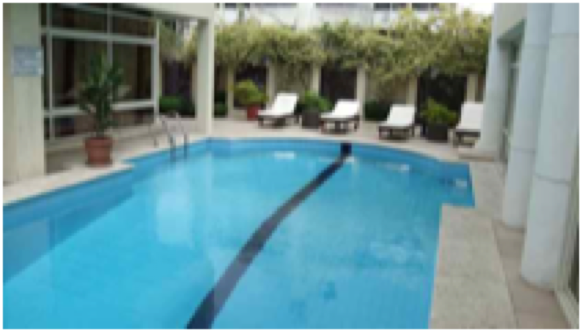
The training program took place in Lagos at a small luxury resort hotel and conference center on the island of Ikoyi — one of the upper class and secure areas of Lagos connected to the business district on Victoria island.  It is located in a residential area with restricted access, surrounded by a wall, and with a team of security people.  Very comfortable and with (too much) good food.  That is where I would do my swimming – in the pool.


Let me share with you some of my observations from this brief and very limited visit — my first exposure to Nigeria.


First, about the people who I met and interacted with.  The sampling was limited – participants in the program, other people in the company, the hotel staff, and the people at the airport.  I found them to be friendly, soft spoken, educated, hard working, professional, and competent. My interactions with people left me with a very positive impression.


As for what I saw, I saw a developing country with energy, potential, and a lot of poverty.  In the business districts, there is construction of new office towers and hotels.  Lagos is a major banking center in Africa with several pan-African banks.  (They advertise on CNN.)  Lagos is connected to the world by the underwater fiberoptic Africa loop.  I had good WiFi Internet in the Hotel.


But, I also saw massive poverty and a very stratified society.  The upper class does well.  I saw in passing, expensive houses on the river with docks and boats.  I saw (at a distance) a very large population living in very poor conditions – in slums and shanty towns.  This leads to some thoughts on the nature of the problem that causes instability in countries such as Nigeria (and others).  That will be a topic for another posting.


But, meanwhile, my brief visit to Lagos was but a first exposure to Nigeria.  I was positively impressed by the people who I met and enjoyed working with them.  I look forward to my next visit and to working with another group.


You may not agree with me but,   That is how I see things.


Mark Louis Uhrich

Maisons-Laffitte, France,  9 July 2012

©Copyright Mark Uhrich 

What would Jesus cut?  Thoughts on fiscal policy.

19/12/2011

“What would Jesus cut?”  I first heard that slogan while in the US last summer at the hight of the contentious debate over the US budget and borrowing limit.  My initial reaction was negative – to mumble something about “religious nuts”.


But then I thought about it.  The question is not so extreme.  In fact, it is very pertinent.


Many people on the conservative right – and indeed most 'Tea Party' supporters – claim to be Christians.  Many of them proudly announce that they are 'born again' Christians and wear that as a badge of credentials.


If one claims to be Christian, a follower of Christ, then one must follow his teachings and subscribe to the principals and values that they represent.  One must put them into practice in daily life.  (Ref. Matthew 25.31-46.)


As I write this, the debate on reducing the US budget deficit continues.  The politicians are deadlocked.  Nothing has been resolved.


Yes, I agree that we need fiscal responsibility.  I agree that the budget deficit (in many countries) is out of control and needs to be reduced.


But in addressing deficit cutting and fiscal responsibility, I would ask my Tea Party friends to consider the questions: “What would Jesus do?  What would Jesus cut?”


Think about it.


You may not agree with me but,   That is how I see things.


Mark Louis Uhrich

Maisons-Laffitte, France,  19 December 2011

©Copyright Mark Uhrich 


It’s a Dangerous Time for Automobiles

01/10/2011

It's a dangerous time for automobiles here in Maisons-Laffitte – and, I suspect, elsewhere.


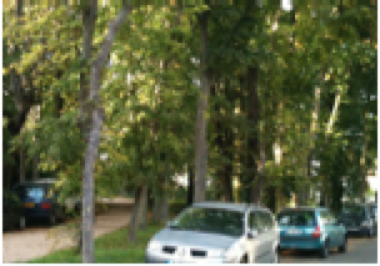
Fall is in the air and the nuts are dropping from the trees – acorns, chestnuts, and others.  Schlup, thump, ping, BOING!  We have a lot of nut trees here.


Woe be it for the automobiles that are parked on the street under the trees.  They are under attack!  Although I haven't actually seen any damage to automobiles due to the dropping nuts,  I would think that there could be some.


With all the nut trees, one might think that we would be overrun with squirrels.  But, for some reason, there are not that many here – certainly no where near as many as one sees in the Boston Public Garden.  There is one that we can see scampering around in the tree next to one of our balconies.  There are owls that live in the trees near us.  Hmmm, I wonder.  Could there be a connection?


But getting back to the automobiles, no, I have not seen any damage from dropping nuts.  Just the same, I am glad that ours is parked in the garage.


And as for myself, when I go out to walk the dog, I wear a hat.  BOINK!


You may not agree with me but,   That is how I see things.


Mark Louis Uhrich

Maisons-Laffitte, France,  1 October 2011

©Copyright Mark Uhrich 


Making a Break for It

22/07/2011


It has been a while since I last posted.  In addition to finishing up the academic year, we have moved still in Maisons-Laffitte but from the “town” side into “Le Parc”.  There is much more space and lots of trees.  And, with the exception of the birds (lots of magpies), it is very quiet.  As one walks from the center of town (only 7 minutes away) into the park, the level of noise drops and there is a peaceful calm.


And there are lots of horses clip clop, clip clop, clipity cloppity strolling around individually or in groups with their people usually.


Horses are big in Maisons-Laffitte.  In addition to the race track, it is a major training center and many people have their own horses.  There is lodging for more than 1600 horses.  There are special traffic rules and horses have right of way in the park.


My mother-in-law also lives here in Maisons-Laffitte.  She lives in the town and likes to go walking in the park.  She tells the story that a few weeks ago, while walking in the park, she heard the noise of horses coming up behind her.  She turned to look and saw coming in her direction, two horses, in full gallop all excited with ears up and eyes wide open and without riders.


They were making a break for it.


She got out of the way and looking back, she could see two young women running as fast as they could to catch up to their horses.


The horses went galloping past and around a rotary where the entering automobile drivers, very properly, yielded to them.


The horses' two people did catch up to them and succeeded in getting them back under control.  Their brief escapade of freedom was over.


But, it is a good thing that “Horses have priority” is clearly indicated as one enters the park.


You may not agree with me but,   That is how I see things.


Mark Louis Uhrich

Maisons-Laffitte, France,  22 July 2011

©Copyright Mark Uhrich